
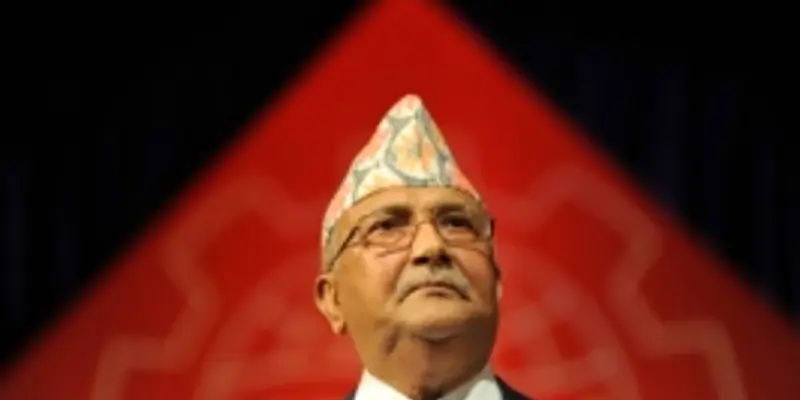
KP Sharma Oli’s latest remarks on the Gen Z demonstrations sit at the center of Nepal’s post-protest political debate. On one side is Oli’s claim that the unrest was shaped by external or regressive forces; on the other is the documented fact that the demonstrations grew out of youth anger over censorship, corruption, and elite impunity.
That distinction matters because the public conversation is now split between narrative and evidence. The facts that can be verified are the scale of the protests, the violence that followed, the deaths and injuries, Oli’s resignation, and later disputes over how police responded. The cause, however, remains politically contested and should not be overstated beyond the available record.
What is verified
The verified record begins with the protests themselves. Major reports say the Gen Z demonstrations erupted in September 2025, initially tied to a social-media ban, but they quickly expanded into a wider anti-corruption and anti-nepotism movement. The unrest turned deadly, with reports citing at least 19 deaths in the immediate early phase and later higher totals as the crisis developed.
Oli later resigned as the protests escalated and state violence became a major national issue. In subsequent statements, he denied ordering police to fire on demonstrators and argued that infiltration by other actors complicated what he called a peaceful youth movement. Those denials are part of the record, but they are still denials, not independent findings.
Oli’s latest position
Oli’s latest public line is consistent with his earlier defense: he rejects the idea that the state was simply suppressing a legitimate youth movement and instead suggests that outside or regressive elements distorted the protests. That is a familiar political strategy in moments of unrest, because it shifts the explanation away from government failure and toward hidden actors.
However, none of the reporting provided here proves that the protests were engineered by those forces. What is verified is that Oli has repeatedly framed the movement that way, while also promising inquiries and denying that his government wanted to suppress social media permanently.
What the opposition says
Opposition and civil society critics have treated the protests differently. Their argument is that the demonstrations reflected a real generational backlash against corruption, inequality, and the perceived insulation of political elites from accountability. In this reading, the violence did not create the protest movement; it exposed the depth of public anger already present.
That interpretation is strengthened by the fact that the protests did not remain narrowly focused on one policy issue. They broadened into a broader political rejection of the ruling establishment, which is one reason the movement became so destabilizing. So while Oli talks about conspiracy or infiltration, his opponents talk about legitimacy, governance failure, and democratic frustration.
The legal and political fallout
The aftermath of the protests has moved into formal scrutiny. Reporting shows a probe commission later asked Oli for clarification over alleged excessive force, and he denied issuing shooting orders. That makes the post-protest phase as much a legal and institutional story as a political one.
This is where careful reporting matters most. Claims about who ordered what, which groups infiltrated demonstrations, or whether the unrest was pre-planned require evidence from commissions, court filings, forensic findings, or credible investigative reporting. Until then, the strongest factual statement is that the government lost control of the situation and the political consequences were severe.
Historical significance
The Gen Z protests matter because they showed how quickly Nepal’s young population can mobilize against perceived elite failure. They also revealed how fragile a government can become when online space, street politics, and corruption anger converge.
Oli’s current remarks are significant not because they settle the issue, but because they show how the battle over interpretation continues long after the protests themselves. In that sense, the real contest is over the historical memory of the movement: was it a democratic youth uprising, a destabilizing conspiracy, or some mixture of both? The verified record supports the first two as competing claims, not as settled truth.
Conclusion
The most accurate report today is that Oli continues to portray the Gen Z demonstrations as shaped by regressive or infiltrating forces, but that remains his political explanation rather than a proven fact. What is established is that the protests were real, deadly, and politically transformative, and that they exposed deep public anger with Nepal’s governing class.
If you want the cleanest factual framing, the story is not “who won the narrative,” but “what can be verified”: a youth-led uprising, a collapsed political defense, and an ongoing battle over accountability.