
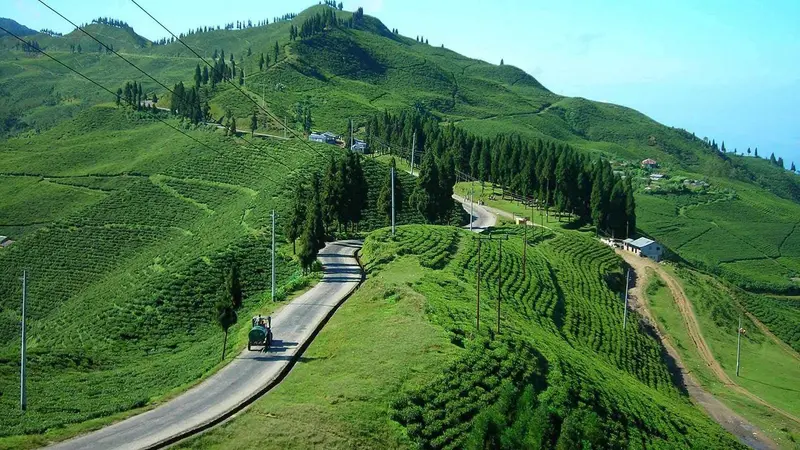
This comprehensive guide provides first-time visitors with a simplified approach, south-to-north road trip route through Ilam, Nepal’s premier tea district. To prevent travelers from getting lost or wasting time on winding mountain switchbacks, the itinerary tracks a logical path along the Mechi Highway. It transitions smoothly from the lowlands to high-altitude border peaks. The article breaks down the journey day-by-day, highlighting top destinations like Sano Pathibhara, Kanyam, Shree Antu, and Sandakpur. Crucial travel advice regarding mandatory cash supplies, vehicle requirements, unique destination highlights, and altitude sickness prevention ensures a safe, engaging, and unforgettable mountain vacation.
Crucial Travel Tips Before You Go
- Bring Cash: Many small shops and local homestays do not accept mobile payments or cards. ATMs are only available in big towns like Fikkal and Ilam Bazaar. Always carry Cash.
- Altitude Sickness Warning: You will start near sea level of 70 m in Jhapa and climb up to 3,636 meters at Sandakpur. When you go high, the air gets thin. You might get a headache or feel dizzy. Drink plenty of water, travel slowly, and carry medicine for altitude sickness.
- Get the Right Vehicle: A normal car or motorbike is fine for the first few days. However, the road to the high northern mountains is broken, rocky, and muddy. You must hire a 4WD jeep to reach the final stops safely.
Day 1: The Green Entry Corridor
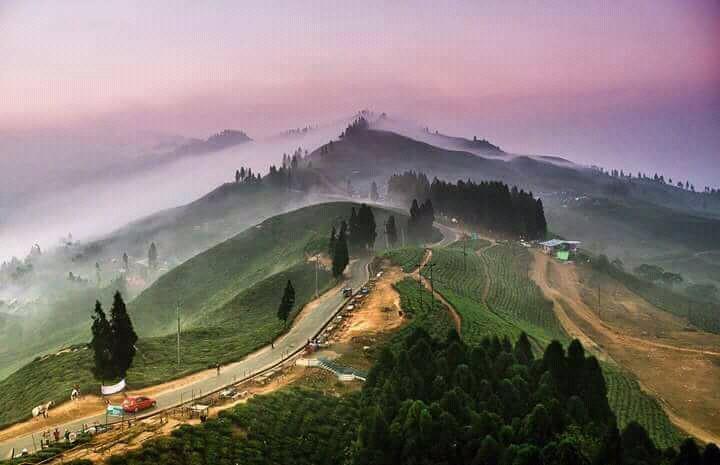
Route: Jhapa ➔ Sano Pathibhara ➔ Kanyam ➔ Fikkal Bazaar
Your journey begins by leaving the hot plains of Jhapa district and driving up the winding bends of the Mechi Highway. The air immediately turns cool and fresh.Your very first stop is Sano Pathibhara. This is a highly revered Hindu temple located on a hill in Kolbung. The shrine is a smaller sister to the famous Pathibhara temple in Taplejung.
- The Highlight: A peaceful stone walkway shaded by a thick canopy of green trees, where the air is filled with the sweet scent of wilderness and the sound of ringing bells.
- Must-Do Activity: Walk up the 1,040 stone steps to the top shrine, ring the large brass bells, and make a wish for a safe journey ahead.
After descending, drive fifteen minutes further north to reach the Kanyam Tea Estate. This is the most famous and photographed tea garden in eastern Nepal.
- The Highlight: Endless waves of dark green tea bushes rolling over the hillsides, sitting right next to the main highway.
- Must-Do Activity: Rent a colorful traditional dress from a local roadside stall and take memorable photographs standing directly amidst the lush tea plants.
Conclude your first day by driving into Fikkal Bazaar. This is a busy, vibrant commercial crossroads.
- The Highlight: A bustling hill market full of local trade, energy, and mountain character.
- Must-Do Activity: Find a small local restaurant and treat yourself to a hot, steaming bowl of traditional Tibetan noodle soup called Thukpa to warm up for the evening.
Day 2: The First Sunrise of Nepal
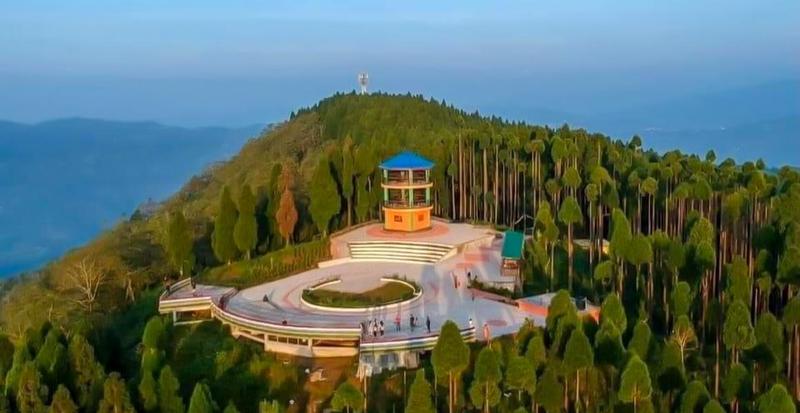
Route: Fikkal Bazaar ➔ Shree Antu
On your second day, you will head toward the eastern edge of the district to experience the local hospitality. Leave Fikkal Bazaar and take a forty-five-minute drive down a paved branch road to Shree Antu.Shree Antu is a quiet village surrounded by pine trees, tea gardens, and a beautiful local lake. It is famous across the country for offering the very best sunrise views in Nepal.
- The Highlight: Beautiful, traditional wooden cottages tucked away in quiet valleys where local families run cozy homestays.
- Must-Do Activity: Check into a local homestay, spend the evening sharing stories with your host family, and drink a hot cup of freshly picked, handmade orthodox tea.
Make sure to go to sleep early. You will need to wake up at 5:00 AM the next morning to walk up to the Antu Danda viewing tower. From there, you will watch the sun rise out of the clouds, painting the snowy peaks of Mt. Kanchenjunga in bright shades of gold and pink.
Day 3: The Historic Capital and The Nine-Cornered Lake
Route: Highway ➔ Ilam Bazaar ➔ Mai Pokhari
Return to the Mechi Highway and drive north to Ilam Bazaar, the historic capital city of the district. The town features modern hotels, clean streets, and excellent restaurants. It is also home to the oldest tea garden in Nepal, which was established way back in 1863.
- The Highlight: Walking among historical rows of ancient tea bushes that have been carefully manicured for over a century.
- Must-Do Activity: Walk through the local market streets to buy authentic souvenirs, such as Chhurpi (a hard, long-lasting yak cheese) and Akabare chilies (very hot, round red chilies).
In the afternoon, board your 4WD vehicle and drive forty minutes north to Mai Pokhari. This is a sacred alpine wetland located at an altitude of 2,100 meters.
- The Highlight: A peaceful, emerald-green lake shaped like a nine-cornered star, hidden completely inside a dense, misty forest of oak and birch trees.
- Must-Do Activity: Take a quiet walk entirely around the lake's perimeter in a clockwise direction, keeping an eye out for rare colorful orchids, unique herbs, and local flying frogs.
Days 4 ,5 & 6: The High Altitude Wilderness
Route: Mai Pokhari ➔ Chhintapu ➔ Sandakpur Peak
The final leg of the trip takes you into the remote northern highlands running along the international border with India. Put on your thickest winter clothes, as the temperature here drops significantly.On Day 5,journey into the wild forests of Chhintapu Peak, which stands at 3,400 meters.
- The Highlight: A vast, protected forest reserve that turns completely red and pink during the spring season when eleven different species of rhododendron flowers bloom at the same time.
- Must-Do Activity: Walk quietly along the forest trails with a camera ready to try and spot a rare, endangered wild Red Panda hiding in the bamboo trees.
On Day 7, drive your 4WD jeep up to the final destination: Sandakpur Peak. Standing at 3,636 meters, this is the highest point in the entire district.
- The Highlight: Standing high above a sea of white clouds, right on the border line separating Nepal and India.
- Must-Do Activity: Wake up before dawn to stand on the freezing peak. As the sun rises, you will see a giant, unobstructed view of four of the five highest mountains in the world: Mt. Everest, Mt. Lhotse, Mt. Makalu, and the massive wall of Mt. Kanchenjunga. It is the perfect, grand finale to your first trip to Ilam.
Day 8: The Secret Ridges and Holy Caves
Route: Ilam Bazzar➔ Siddhi Thumka➔Mangalbare ➔ Gajurmukhi
After watching the sunrise, head back to the western side of the district to discover Ilam’s quieter, spiritual side. Drive toward the Deumai area to find Siddhi Thumka.
- The Highlight: A high, windy ridge at 1,800 meters that gives you sweeping, panoramic views of both the southern plains and the northern mountains without any tourist crowds.
- Must-Do Activity: Relax on the grassy hilltop until the late afternoon to watch a spectacular, uninterrupted golden sunset over the river valleys.
From the ridge, travel deeper into the valley down toward the banks of the Deumai River to visit Gajurmukhi Devisthan.
- The Highlight: A deeply spiritual stone cave temple carved naturally into the side of a massive, rocky river cliff.
- Must-Do Activity: Walk down to the edge of the rushing river to wash your hands and face in the clean water before entering the cave shrine.
- Note: The road to Gajurmukhi is unpaved and rough. Avoid this detour if there is heavy rain, as the tracks can become blocked by thick mud.
Recommended Travel Seasons
To get the most out of this itinerary, timing is everything. The absolute best months to visit Ilam are from October to December (for perfectly clear mountain views and dry roads) and from March to May (to see the rhododendron forests blooming). Try to avoid the summer monsoon months from June to September, as heavy rains bring thick fog that hides the views, and landslides can block the mountain roads.