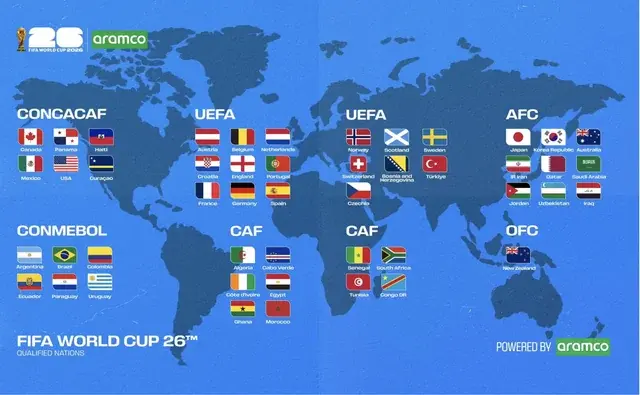
The 2026 World Cup has already delivered one of the most important themes in modern football: the rise of underdog nations. This is not just a feel-good storyline. It is a structural change in how the tournament feels, because the expanded 48-team format has created more room for countries that once would have been outsiders. For supporters in those nations, every point now feels historic, every goal feels national, and every late save can change the mood of an entire country.
Cape Verde became the clearest face of that shift. Their first-ever World Cup goal and their memorable draw with Uruguay turned them from participants into symbols of what this edition represents. But they are part of a wider picture. The new format has allowed more teams from across regions to remain alive longer, and that has made the group stage feel broader, richer, and more unpredictable than in a classic 32-team tournament. The real question now is whether these underdogs can carry their momentum into the knockout stage, where no reputation protects anyone.
The Rise of Underdog
The rise of underdog nations matters because the World Cup has always been at its best when it feels larger than the usual elite circle. In this edition, that expansion is not theoretical; it is visible in the stories on the pitch. Cape Verde’s results are the clearest example, but they are also a sign of something bigger: more teams now believe the road to the knockout stage is not reserved only for the traditional powers. That belief changes the emotional texture of the tournament.
There is also a tactical reason these stories resonate. Under pressure, underdog teams often play with unity, discipline, and a lower fear of failure. That can make them dangerous in a compact group stage and even more dangerous in a one-off knockout match. When the larger teams are expected to control the ball and the result, the underdogs can turn patience into a weapon. That is why these matches feel so thrilling: they are not only about skill, but also about nerve, timing, and identity.
Knockout football brings back the danger that the group stage softened.
To understand why the upcoming knockout matches are so compelling, new fans should watch for three things.
- First, the mental shift. In the group stage, a team can recover from a draw or even a defeat. In the knockout stage, one mistake can end the journey instantly.
- Second, the emotional contrast. Underdogs arrive with momentum and belief, while bigger nations arrive with expectation and pressure.sports.
- Third, the tactical tension. Smaller teams often defend deep, counter quickly, and lean on set pieces, while favorites are forced to break them down carefully.
That combination is what makes knockout football special. It is not only about who is stronger on paper. It is about who can handle the moment when the margin becomes paper-thin. That is why underdog nations matter so much here: they force the tournament to become unpredictable at exactly the point when fans crave drama most.
Pitfalls & Rumors
It is important not to confuse genuine sporting progress with hype. Cape Verde’s story is real because it is backed by results, not rumor. The same goes for the broader trend of smaller nations making the knockout picture more diverse; that comes from the structure of the tournament itself, not from media exaggeration.
At the same time, the idea that the expanded format automatically makes the World Cup better is too simple. More teams create more opportunity, but they also create more room for safety nets and less group-stage danger for some favorites. So the correct reading is balanced: the tournament has clearly become more inclusive and more globally dramatic, but its new structure still protects some of the biggest names more than the old format did.
The 2026 World Cup is becoming unforgettable because underdog nations are no longer just guests; they are shaping the story of the tournament. As the knockout rounds begin, the stakes get sharper, the margins get thinner, and the dreams of smaller football nations become even more powerful. Follow the knockout stage closely