
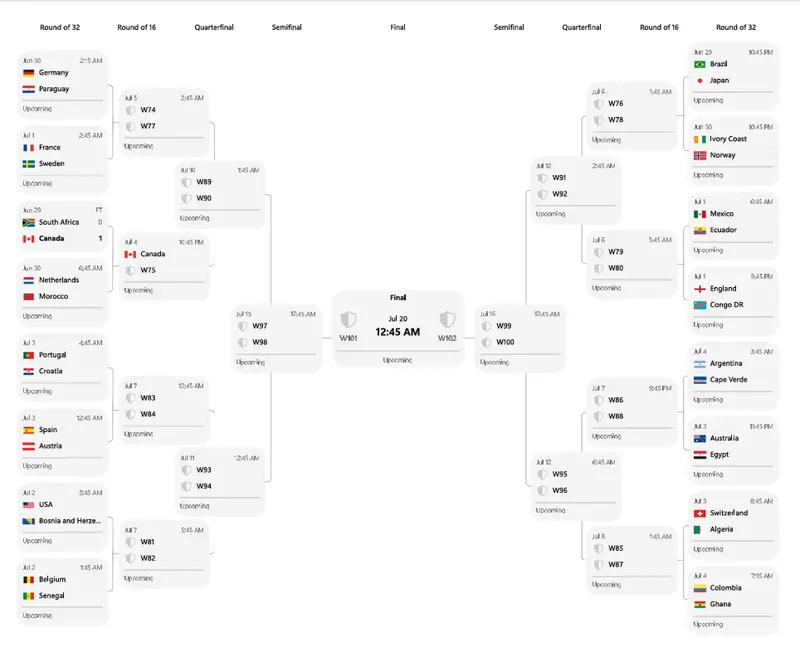
The knockout stage is the point where the World Cup becomes brutally simple. Win and continue. Lose and go home. That clarity is what makes this phase so powerful, and in 2026 it arrives with even more weight because the tournament has expanded to 48 teams and opened with a Round of 32.
The new format has changed the emotional shape of the competition. More countries now have a realistic path into the knockout rounds, which means more fan bases stay invested deeper into the tournament. At the same time, the old sense of fear in the group stage has softened a little, because eight third-placed teams can still qualify. That balance has made the World Cup more inclusive, but also more complicated.
Why the new format matters
The biggest change is structural. Instead of moving straight from groups to a Round of 16, the 2026 World Cup begins its knockout phase with 32 teams. The 12 group winners, 12 runners-up, and eight best third-placed teams move forward, which creates a wider bracket and a longer road to the trophy.
That matters because it changes how teams play the group stage. Finishing first still gives an advantage in the bracket, but it no longer guarantees the same kind of clean two-team advance that older World Cups used. The result is a tournament that feels broader and more open, while still keeping the knockout pressure sharp once the bracket starts.
Why the knockouts are thrilling
The knockout rounds are where emotion and tactics collide. In this phase, a single goal can change a nation’s history, and a single error can erase years of preparation. That is why the Round of 32 feels so important: it is the first moment when the tournament becomes pure elimination football.
For underdog nations, this is the chance to turn belief into legacy. For major powers, it is the stage where expectation becomes a burden. That tension is what makes the World Cup so compelling. The teams that survive are usually the ones that combine quality with calm, because knockout football punishes hesitation and rewards clarity.
The road to the final
The bracket is now straightforward for fans to follow:
- Group stages
- Round of 32.
- Round of 16.
- Quarter-finals.
- Semi-finals.
- Final
That path is longer than in previous editions, which means the eventual champion must survive more pressure-filled matches. The final will be held on 19 July 2026 at MetLife Stadium, giving the tournament a major climax after weeks of high-stakes football. Every round before that serves as a narrowing test of nerve, fitness, and tactical discipline.
What fans should watch
A few things will define the coming matches:
- Whether underdog nations can keep their momentum against bigger opponents.
- Whether the favorites can handle the extra pressure of a longer knockout path.
- Whether the new format continues to create more balanced and entertaining matches.
- Whether the expanded bracket makes the tournament feel richer without losing its edge.
The key difference between the group stage and the knockouts is simple: the group stage allows recovery, but the knockouts allow none. That is why the atmosphere changes so sharply once the bracket begins. Every substitution, every set piece, and every defensive decision becomes magnified.blog.
What has changed in 2026
The present condition of the tournament shows FIFA’s intention clearly. The World Cup is bigger, more global, and more inclusive than before. The new knockout structure gives more nations a chance to survive longer, and that has produced a wider range of stories and stronger interest from fans across continents.
Still, the classic World Cup truth remains untouched. In the knockouts, there is no safety net. That is why the next matches are so thrilling. They are not just fixtures. They are elimination events, and the road to the final is now where the tournament truly begins to reveal its identity.
Conclusion
The 2026 World Cup knockout stage is the perfect blend of new structure and old pressure. The expanded format has made the tournament broader and more competitive, but the knockout rounds restore the danger that makes the World Cup unforgettable. As the road to the final continues, the real story will be which teams can keep their calm when the margins disappear.