
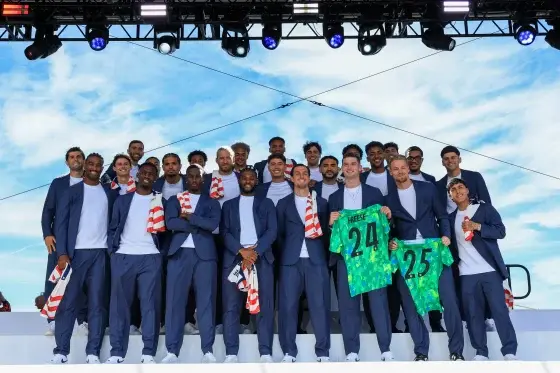
The United States Men’s National Team has entered its most ambitious era in modern history. Once defined by grit and underdog energy, the USMNT now carries a roster full of players who compete weekly in Europe’s biggest leagues, and that changes everything. It is no longer a team hoping to belong; it is a team built to compete.
The scale of the rise is easy to see in the World Cup story alone. The U.S. was one of the pioneers of the inaugural 1930 tournament, shocked England in 1950, missed decades of World Cups, then returned to relevance after the 1994 home tournament helped ignite MLS and the broader soccer ecosystem. That long arc is why the current moment feels so important: the USMNT is not appearing by accident, it is arriving through a generational build.

The historical climb
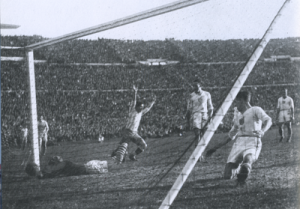
The USMNT’s history starts far earlier than many casual fans realize. The first unofficial international match came against Canada in 1885, and the United States Soccer Federation was formed in 1913, giving the country an organizational foundation before football became globally massive. That early start matters because it shows the U.S. was never absent from the sport; it simply took much longer to build a system strong enough to compete consistently.
The 1930 World Cup run remains the program’s purest early statement. A third-place finish in the inaugural tournament put the U.S. on the football map, while the 1950 upset of England became the eternal reminder that American teams can produce historic shocks when structure and belief meet at the right moment. The later decades were rougher, including a long World Cup drought, but the 1994 tournament changed the country’s soccer trajectory by creating infrastructure, public attention, and eventually MLS.
Why the rise happened
The biggest reason for the USMNT’s modern leap is player quality. In earlier eras, the roster leaned heavily on domestic leagues and limited international exposure, but now the core includes players developed in Europe’s top environments, which raises technical speed, tactical awareness, and competitive edge. Christian Pulisic, Weston McKennie, and Tyler Adams are not just names; they are proof that U.S. talent can mature inside elite systems.
The second reason is tactical evolution. The old image of the U.S. as a direct, physical, counterattacking team is fading, replaced by a squad capable of pressing high, keeping possession, and controlling tempo against stronger opponents. That shift is not cosmetic. It changes how opponents prepare, how games unfold, and how far the U.S. can realistically go in knockout football.
How the progress shows
The clearest sign of progress is consistency in regional competition. Winning 7 Gold Cups and multiple CONCACAF Nations League trophies shows the U.S. has turned regional expectation into habit rather than hope. That matters because teams that dominate their confederation usually enter World Cups with a stronger winning culture and less fear of the moment.
The deeper sign is structural. MLS academies, scouting pathways to Europe, and earlier access to professional environments are creating a more polished player pool than past generations ever had. In simple terms, U.S. prospects are no longer being asked to catch up later; they are being shaped earlier, tested earlier, and exported earlier.
Pitfalls and rumors
One common exaggeration is that the U.S. has already reached its ceiling as a global power. That is not supported by history or by tournament evidence, because ranking strength does not automatically translate into knockout consistency. The USMNT still has to prove it can beat top sides when margins shrink and pressure spikes.
Another myth is that the rise is only about a few star players. The truth is broader: elite individuals matter, but the real change is the system around them, from youth development to club pathways to more sophisticated tactical education. Without that base, the top names would not be enough to sustain progress.
Future outlook
The prospect for the USMNT is stronger than at almost any point in its history. The team already has the ranking, the talent pool, the regional trophies, and the home-stage spotlight to build something lasting. If it keeps converting development into knockout results, the U.S. can move from promising contender to genuine tournament threat.