
How the Game Started
Spain had been shaky in the group stage, but this game was different. They looked calm, confident, and fully in control. Austria tried to press high, but Spain’s center-backs and Rodri handled it well. They used short, sharp passes to break the Austrian lines.
From the early minutes, Spain moved the ball quickly. The left side was especially active. Cucurella pushed high up the flank and linked up with Alex Baena and Dani Olmo. That overload caused problems for Austria’s defenders. Spain created waves of attacks from the left, not just from Yamal.
The Disallowed Goal and the First Real Touch
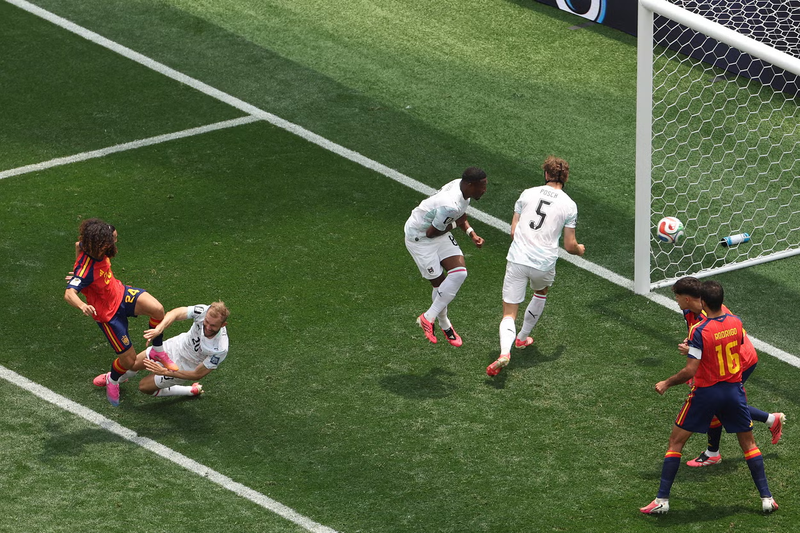
The first big moment was a disallowed goal around the 28th minute. Cucurella poked a ball into the net, but the referee ruled a foul on Austria’s goalkeeper. It was a controversial call, and the crowd reacted with mixed feelings.
Spain did not lose belief. They kept moving the ball and looked for the right opening. The build-up was steady, with Rodri and the center-backs helping to keep the pressure on.
The First Goal: Oyarzabal Breaks the Deadlock
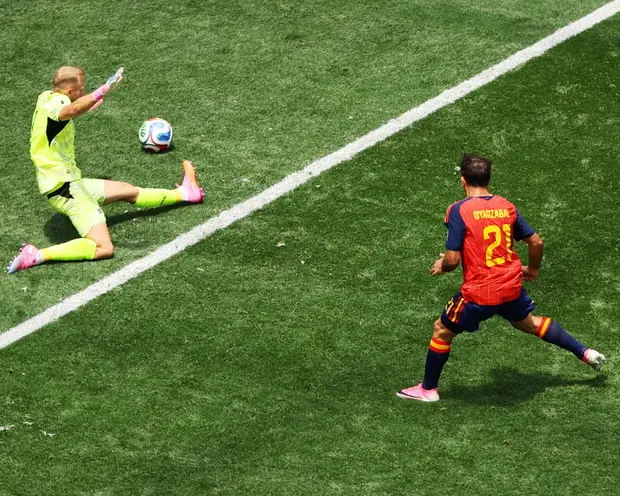
In the 36th minute, Pedri fed Cucurella, who rolled a low cross into the box. Oyarzabal finished it calmly. It was his first goal of the game and came from a clear left-side move. The assist was from Cucurella, but the build-up also involved quiet work from the midfielders and the center-backs who kept the ball in play.
The goal changed the mood. Spain felt more relaxed, and Austria had to lift their press. Yet Spain did not panic. They kept the same rhythm, moving the ball with simple, clear passes.
The Second Goal: Porro Adds Power
Porro added a second in the 66th minute. He headed in a Baena ball with power. It was his first international goal, and the assist came from Baena’s intelligent crossing. The build-up again showed how the whole team was involved, not just one player.
Spain now had a solid lead. They slowed the pace, controlling time and space. The midfielders helped to keep possession high. Austria could not find a clear opening.
The Third Goal: Oyarzabal Seals It
Oyarzabal scored a late third at the 89th minute. Cucurella slid a pass across the box, and Oyarzabal tapped it in. That goal sealed the win and showed Cucurella’s impact again. The movement was simple, but the timing was perfect.thestar.
Spain did not rush. They kept the same calm, controlled style. The win was built on a team effort.
The Real Creative Force
The match was built on Cucurella’s influence. He delivered two assists, ran the left side, and created space for others. His work was the main reason Spain could score so easily.
Alex Baena also played a key role. He created the Porro goal with a strong cross and was involved in many attacking sequences. His passing helped break the Austrian lines. Rodri and the center-backs helped to keep the pressure on, while the midfielders controlled time and space.
Yamal had a solid game. He stretched the defense and made some dangerous runs, but he did not score or assist. The win was built more on Cucurella, Baena, and Oyarzabal’s consistency. Spain’s performance was about balance, not a single star.
The Tactical Story
Spain’s midfield was the key. They used vertical passes to bypass Austria’s press. Their left side was the main weapon, not just their right. The midfielders controlled time and space, helping to keep possession high
Austria’s midfielders were isolated. Spain controlled the game with 77% of the ball in some periods. They made it hard for Sabitzer and Arnautović to play. The game was about control, not just goals.
Final Thoughts
Spain are now in the last 16 again. This win showed they are back to their best. Oyarzabal is proving his value, Cucurella is the engine, and Baena is a key creator.
Austria will feel they were unlucky, but Spain were too strong. The match showed what a top team can do against a high-press system. The game was about balance, not one player. Spain’s performance was a clear team effort, and that is what made the win.