
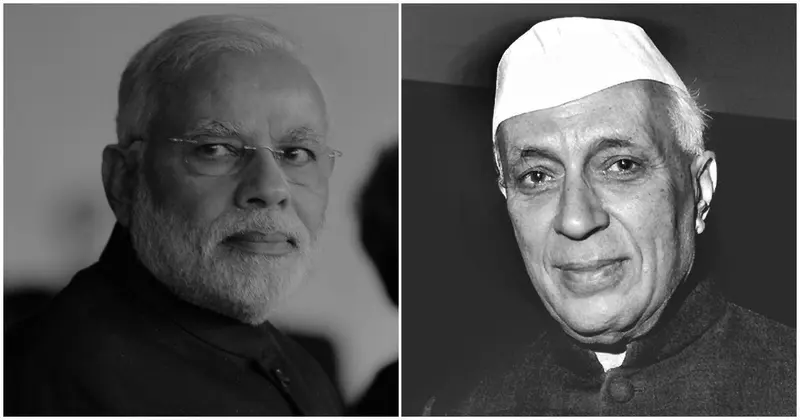
Narendra Modi’s latest tenure milestone is historically significant because it places him at the top of one of India’s most closely watched political records: the longest continuous elected run as prime minister. According to current reporting, he completed 4,399 consecutive days in office on June 10, 2026, overtaking Jawaharlal Nehru’s post-election record of 4,398 days.
That distinction is important. It does not mean Modi has surpassed Nehru’s total time in office, but it does mean he has now held elected executive power longer without interruption than any prime minister in India’s history. In a democracy where coalition politics, electoral turnover, and party fragmentation often limit longevity, that alone makes the milestone politically meaningful.
What the numbers show
The record being discussed is specifically the continuous elected tenure after winning general elections. On that measure, Modi’s count reached 4,399 days on June 10, 2026, while Nehru’s elected tenure is listed at 4,398 days.
However, the broader lifetime record is different. Nehru still remains India’s longest-serving prime minister overall, having served from 1947 until 1964, which is far longer than Modi’s current total time in office. So the milestone is best understood as a record in one category rather than a full historical takeover of every prime ministerial benchmark.
Historical context
Nehru’s political stature comes from being India’s first prime minister and from leading the country through the early decades after independence. Modi’s record, by contrast, reflects a much later democratic era shaped by mass media, nationalized electoral competition, and a far more centralized party system.
That difference matters because the two records are not just about duration; they also reflect different political environments. Nehru operated in the formative years of the republic, while Modi has governed in an era of nationalized campaigning, stronger central leadership, and three straight Lok Sabha victories in 2014, 2019, and 2024.
Why this matters
This milestone matters for three reasons. First, it shows unusually durable electoral legitimacy, because uninterrupted elected tenure depends on repeated victory at the national level. Second, it demonstrates organizational strength, since a leader cannot stay in power that long without a disciplined party and a resilient campaign machine. Third, it reinforces the political symbolism of continuity, which supporters often present as proof of stability and critics often view as a sign of centralization.
In practical terms, long tenure affects how policy is made. A leader who stays in office for more than a decade can shape institutions, agenda-setting, diplomatic posture, and long-term state capacity in ways that shorter-term governments usually cannot. Therefore, the record is not only ceremonial; it also reflects the scale of influence Modi has accumulated over time.
Electoral path
Modi’s uninterrupted run is tied directly to his repeated national mandates. He first took office in 2014 and then returned after the 2019 and 2024 Lok Sabha elections, giving him three consecutive general-election victories as prime minister.
That electoral sequence is the core reason the record is framed as an “elected” tenure milestone. The important point is not just that he remained in office, but that he did so through repeated democratic renewal rather than through an unelected or interim arrangement. Consequently, the milestone carries both political and constitutional significance.
Bigger significance
The broader historical significance lies in how India remembers leadership. Nehru symbolizes state-building, institution formation, and the first decades of independent India. Modi symbolizes electoral consolidation, long-run party dominance, and a more centralized style of national governance.
At the same time, records can be interpreted differently depending on the political lens. Supporters will see the milestone as proof of public trust and continuity, while critics may argue that longevity can also concentrate power and narrow political competition. Both readings exist, and both are part of the modern democratic debate around Modi’s tenure.
Bottom line
Modi’s 4,399-day milestone is a real and significant political record, but it should be stated precisely: he now holds the longest uninterrupted elected prime ministerial tenure in India, while Nehru still retains the longest overall time in office.
That distinction makes the story historically meaningful without overstating it. It marks a rare democratic endurance record, and it will likely remain a major reference point in debates over India’s political continuity, leadership style, and constitutional history for years to come.