
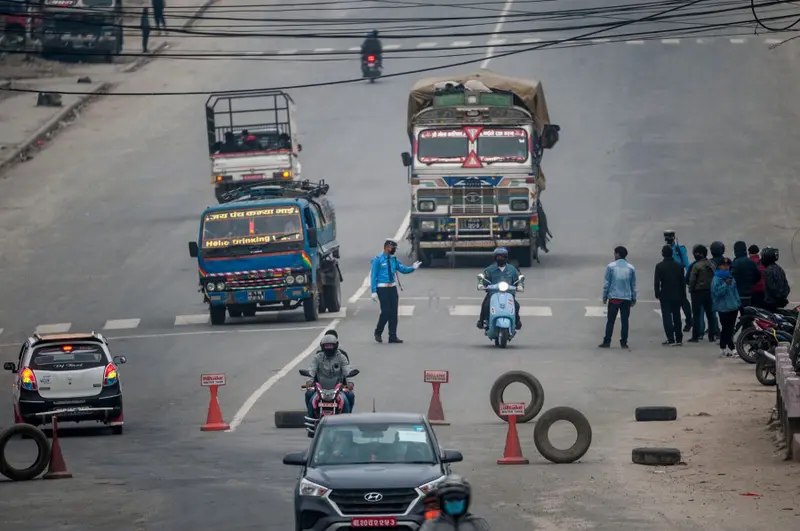
The Ministry of Infrastructure Development has circulated a draft Transport Reform Bill that would transform roadside enforcement by empowering traffic police and authorised officers to levy on‑the‑spot fines from Rs 500 up to Rs 100,000. This proposal comes amid rising road casualties, widespread noncompliance, and long-standing complaints that existing penalties are too low to deter repeat offenders. Consequently, policymakers argue that steeper, more flexible fines will promote discipline, improve road safety, and deliver faster enforcement outcomes.
Background: the current fines and practice
Historically, Nepal’s traffic enforcement relied on a patchwork of statutory penalties set under older transport laws and periodic amendments, with many everyday violations attracting modest fixed fines. For years, common infractions such as using a mobile phone while driving, failing to wear a helmet, or minor lane violations typically carried fines in the range of roughly Rs 500 to Rs 1,500, and some traffic penalties were as low as Rs 25–200 before later upward adjustments. Moreover, enforcement routinely involved documentation seizures, court referrals, or administrative follow-ups rather than large immediate monetary penalties. As a result, many drivers treated fines as a routine cost of noncompliance rather than a credible deterrent.
What the draft bill would change
First, the draft greatly expands the officer’s authority to impose higher on‑the‑spot fines calibrated to the offence’s gravity, with maximum penalties rising to Rs 100,000 for selected violations. Second, the bill multiplies the number of offences eligible for immediate fines—proposed lists grow substantially so more routine breaches can be settled on the spot. Third, the structure becomes tiered: minor breaches (e.g., jaywalking) would start at modest amounts (Rs 500), mid-level offences (e.g., no helmet, improper parking) would attract several thousand rupees, and severe breaches (e.g., heavy tinting that obstructs visibility, serious DUI, misuse of public transport permits) could trigger fines up to Rs 100,000. Finally, repeat offences would carry escalating penalties—subsequent violations would add a percentage surcharge, making recidivism far more costly.
Examples of proposed fine ranges and new items
- Pedestrians crossing outside zebra crossings — Rs 500 on‑the‑spot.
- Riding without helmet / not wearing seatbelt — about Rs 3,000 (up from a few hundred).
- Mobile phone use while driving, lane violations — up to Rs 10,000 for some categories.
- Driving under the influence (DUI) — large minimum fines (e.g., Rs 25,000) and substantial maximums.
- Heavily tinted/opaque windows that block view — the draft lists fines up to Rs 100,000 for first offences.
- Failure to have inspection, pollution certificate or route permits — fines scaled by vehicle type (thousands of rupees).
These examples demonstrate how the bill reassigns low historical penalties to higher, more deterrent levels.
Why officials pushed for larger fines
Officials and traffic police argue that decades of minor fines failed to curb dangerous behaviour; thus, steeper penalties are necessary to change incentives. Road safety advocates likewise say financial deterrence must be meaningful to alter risky choices, while administrative advocates note that on‑the‑spot fines speed enforcement and reduce backlog at courts. At the same time, proponents insist the bill’s tiered system allows proportionality—minor offenders won’t face ruinous penalties, while clear, repeat, or dangerous violations will be punished strictly.
Concerns, equity, and enforcement risks
However, critics warn that sharp increases raise fairness and implementation questions. First, very high on‑the‑spot fines can disproportionately affect lower‑income motorists unless alternatives (payment plans, sliding penalties) are offered. Second, expanding discretionary fining power heightens the risk of arbitrary or corrupt enforcement if strong oversight, transparent receipts, and complaint mechanisms are not simultaneously instituted. Third, civil‑liberties advocates stress that fines should be accompanied by due‑process safeguards: clear offence definitions, standardized fine schedules, and an accessible appeals process.
Comparing past and proposed procedures
Previously, many violations were processed through fixed low fines, administrative notices, or court summonses, and in numerous instances license or vehicle papers were temporarily seized pending resolution. Now, the draft shifts emphasis toward immediate monetary penalties with broader offence coverage and amplified amounts; it also formalises escalation for repeat offences and sets explicit, much higher ceilings for worst‑case breaches. In effect, the move replaces a low‑value, paper‑heavy enforcement model with one designed for rapid monetary correction.
What to watch next (practical short checklist)
- Legislative timeline: Monitor when the Ministry submits the bill to the Council of Ministers and the Parliament’s transport committee.
- Official schedules: Look for the final published fine schedule and the precise list of offences eligible for on‑the‑spot fines.
- Safeguards: Check whether the government pairs fines with clear receipts, digital payment options, and an appeals mechanism.
- Public outreach: Watch for awareness campaigns so drivers understand new rules and penalties before enforcement intensifies.
Conclusion
The draft Transport Reform Bill marks a major shift in Nepal’s enforcement approach by expanding on‑the‑spot fining powers and increasing penalties to clearly higher levels, aiming to curb unsafe behaviour and modernise enforcement practices. Ultimately, balancing deterrence with fairness and transparent implementation will determine whether the reforms reduce violations or simply shift the enforcement burden; oversight and clear procedural safeguards will be essential for public acceptance and effectiveness.